Approach
Puppetry uses visuals and audio to tell a story. In my case, I had to really think about how to portray a scene without using words and with the limited movement of a puppet.
1. Selecting a story
2. Storyboarding
3. Making the puppets
4. Connecting the electronic components
5. Programming the puppets to move
Prototype 1
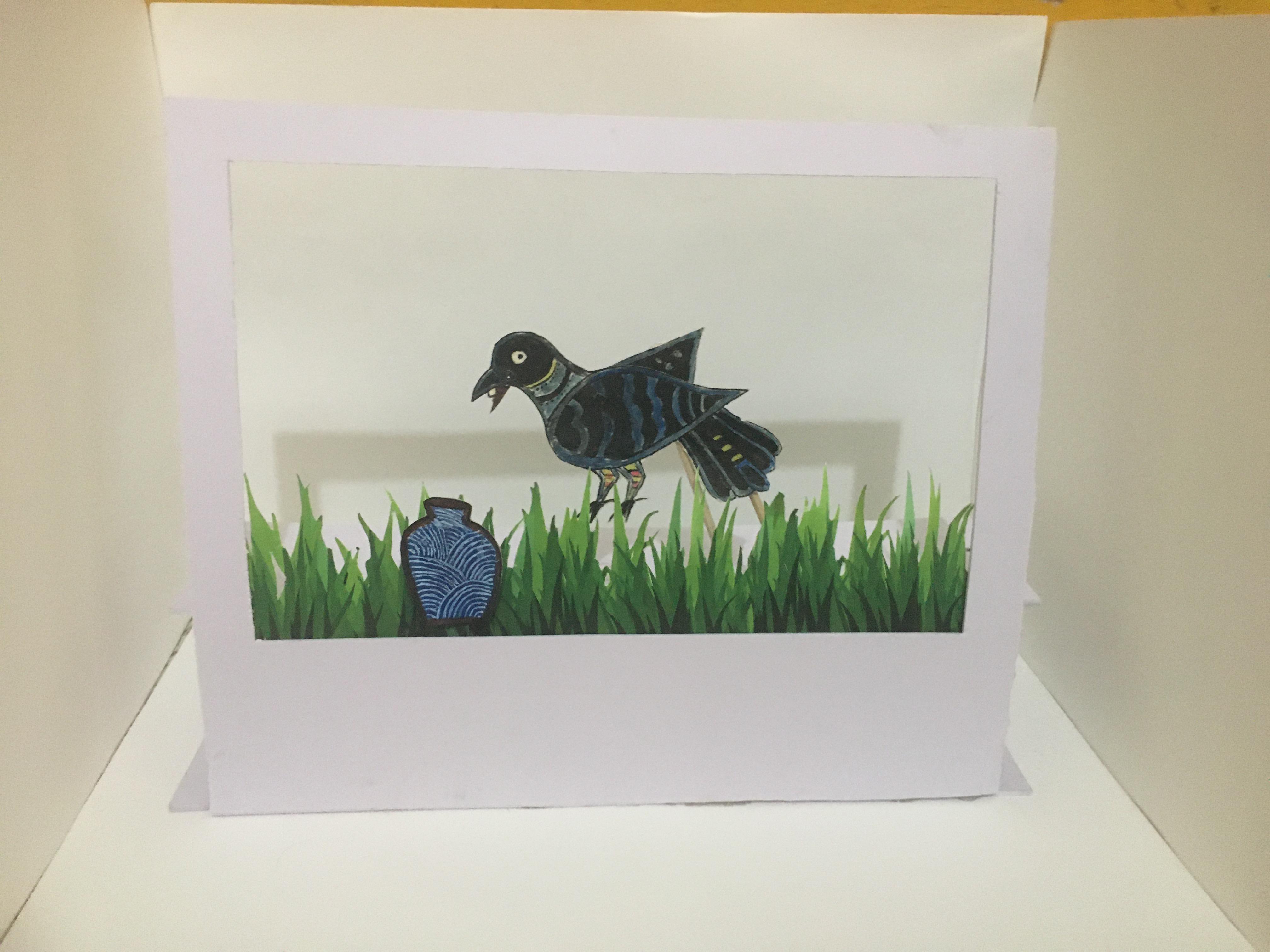
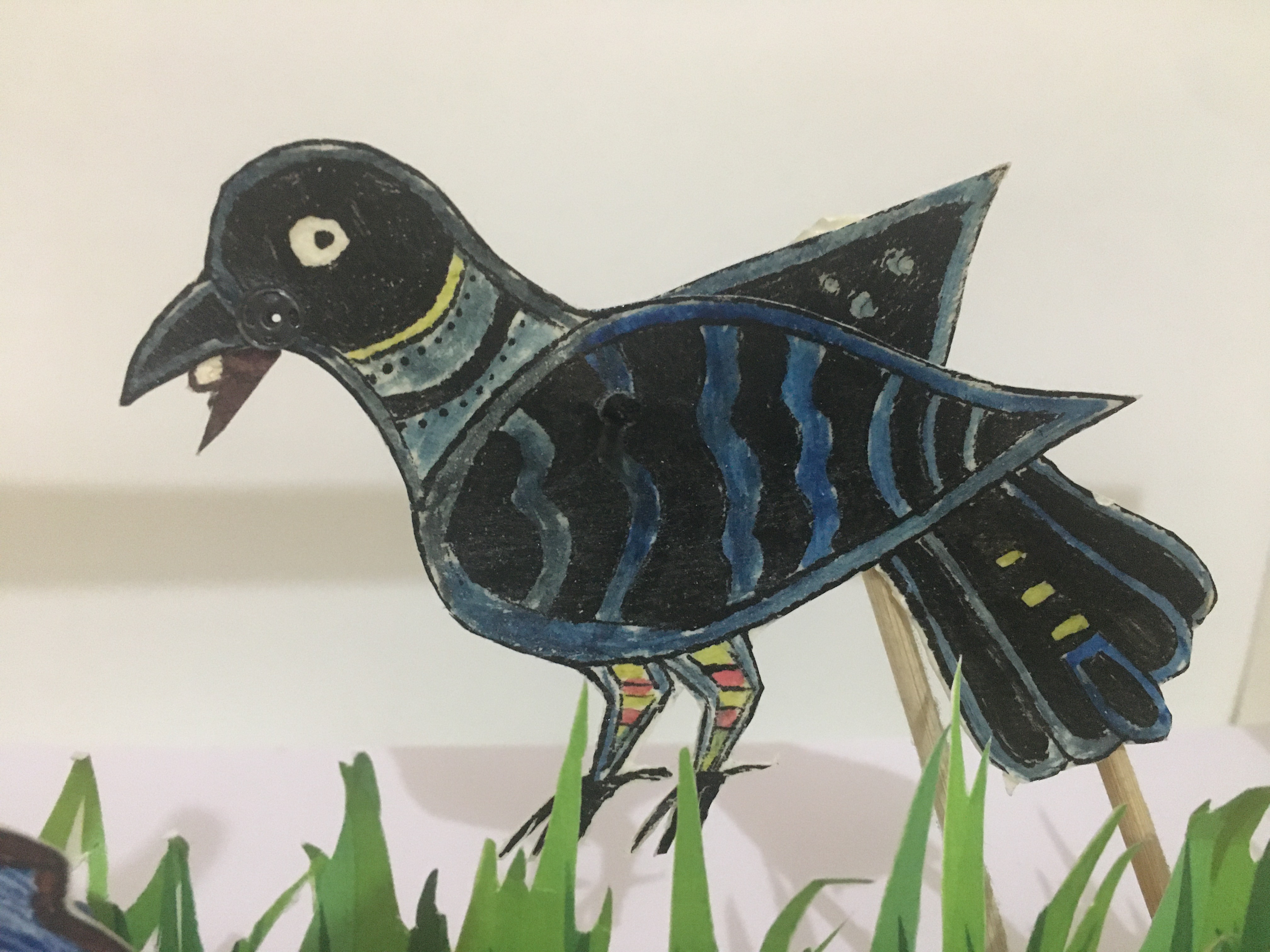
My first prototype involved the well-known children's story 'The Thirsty Crow' in which a crow drops pebbles into a pot to get the water to rise up for it to drink.
In my prototype, with every forward movement of the crow, where it drops a pebble into the pot, an LED lights up, to show the pot filling up. My first prototype involved the well-known children's story 'The Thirsty Crow' in which a crow drops pebbles into a pot to get the water to rise up for it to drink.
With every forward movement of the crow, where it drops a pebble into the pot, an LED lights up, to show the pot filling up.Cooking is a meaningful interaction between the elderly and children. Cooking and food can bridge the communication gap, forming positive connections. However, children often lack interest and do not want to engage in it.
Prototype 2
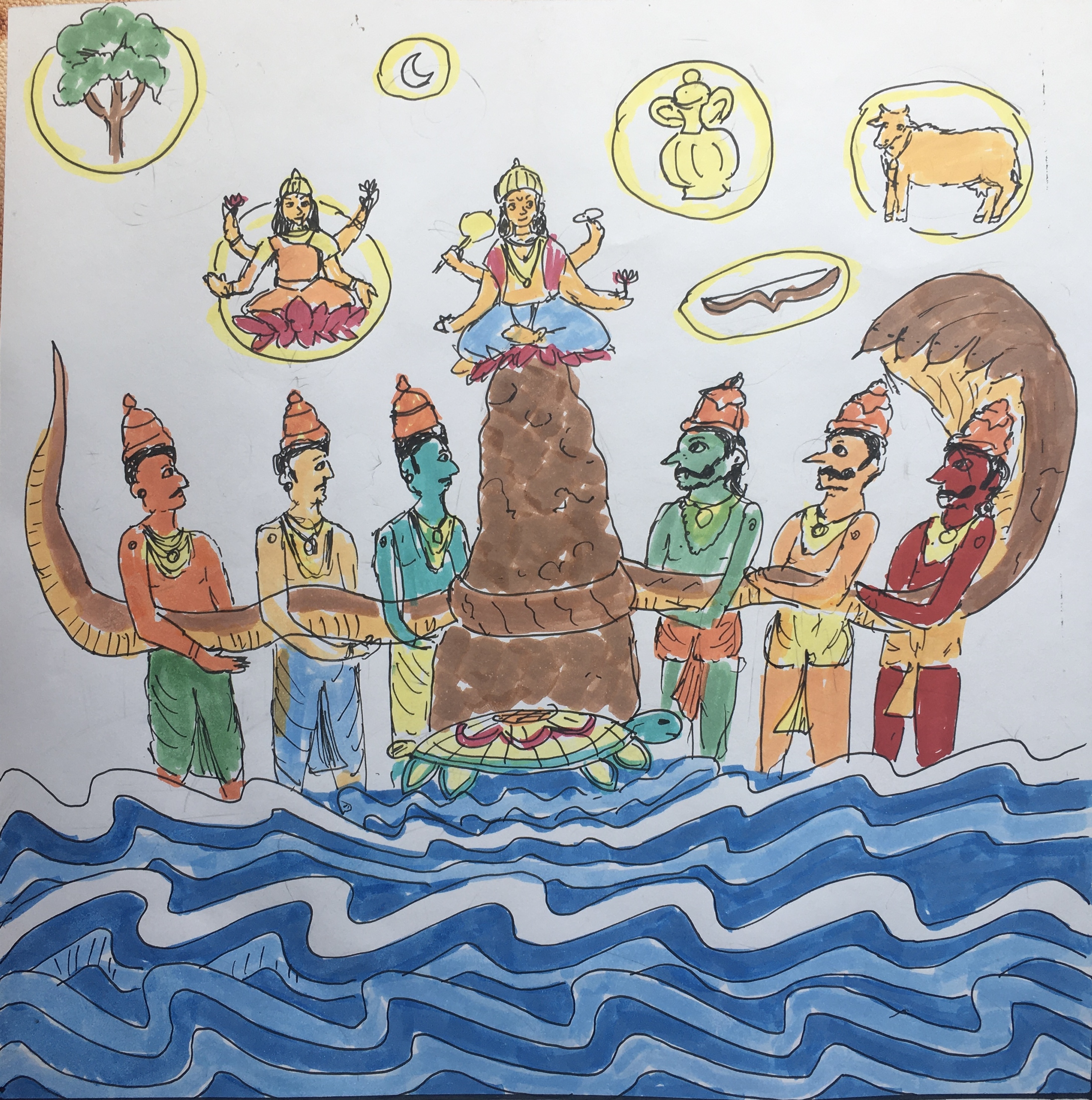
In the second prototype, I chose a story from Hindu Mythology. In this story, gods and demons are churning an ocean with the help of a snake in hopes of finding the Amrutham, the drink of immortality. In this process, they find several celestial beings and objects.
Below are images of the puppets.
.jpg)
.jpg)