The Accidental Lab
an Interactive Museum Exhibit
Year
2025
Role
Technical Design and Development
Tools
Unity, Computer Vision
Team
Peggy Cheng, Aashita Verma, Amy Zhang
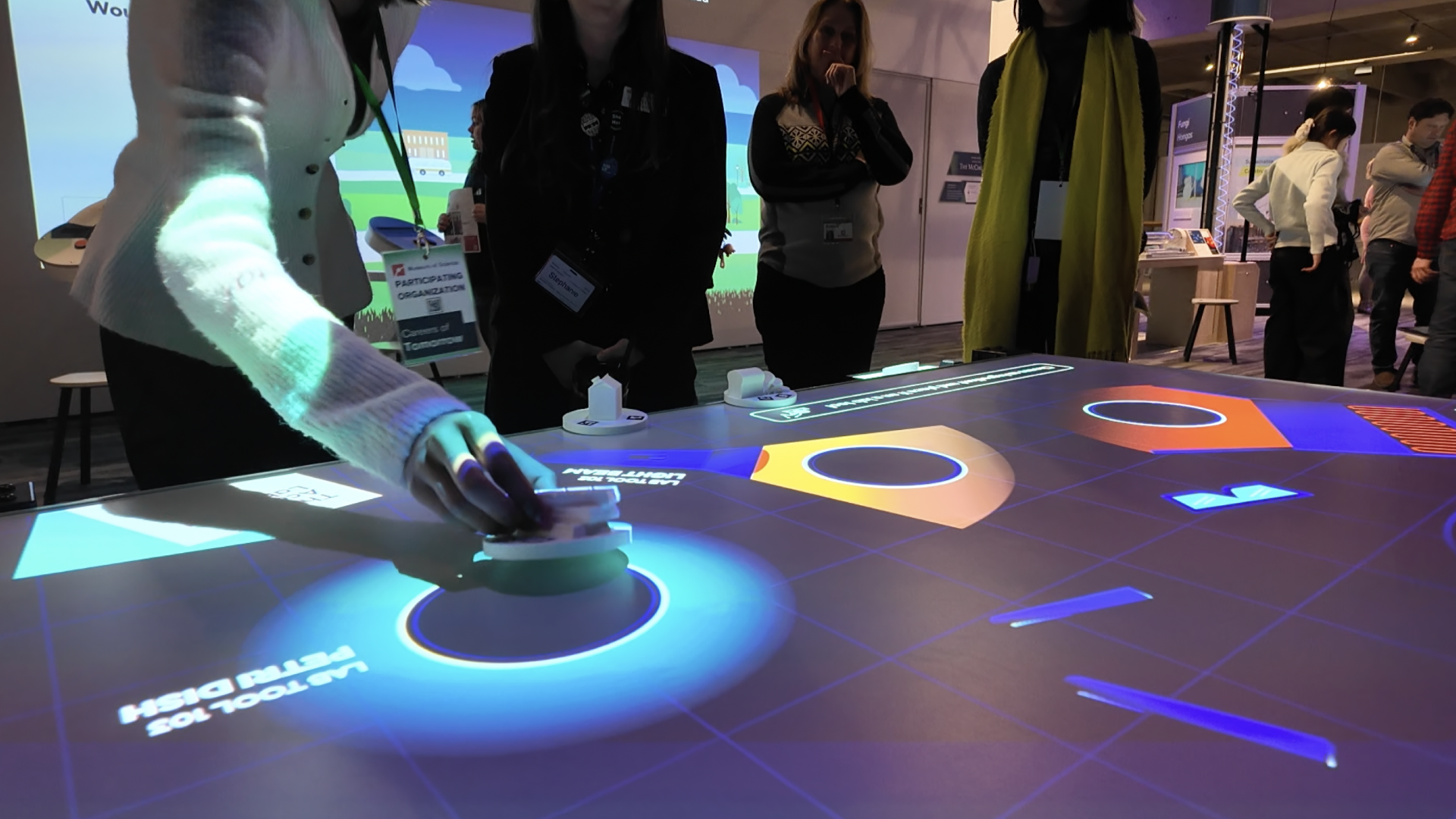
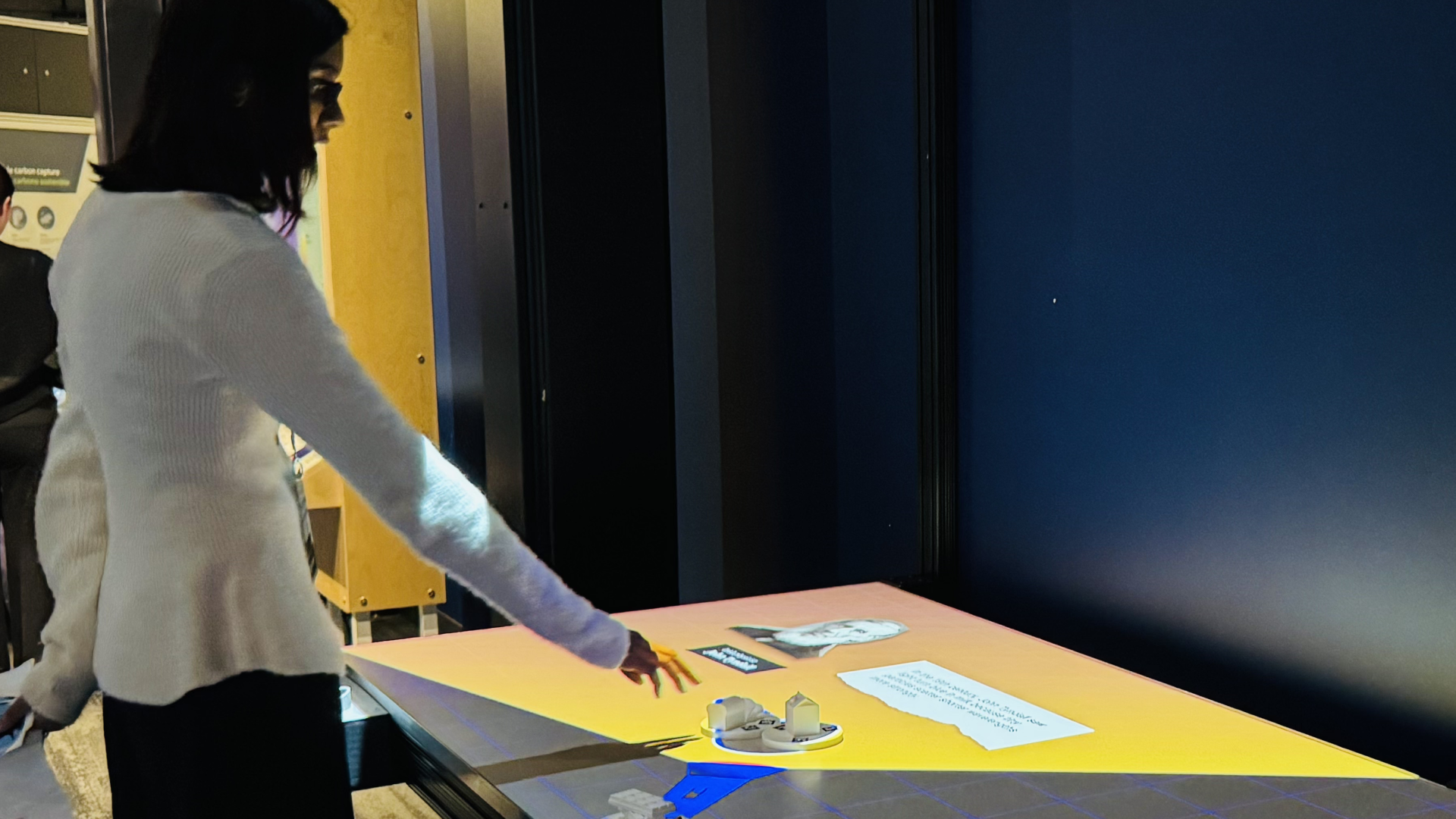
Science doesn't always go to plan and that's the point. An interactive table where mixing everyday objects sparks a story drawn from real discoveries, speculative futures, and productive failures. Built with the Museum of Science, Boston.
Experience Goals
To immerse visitors in the spirit of scientific revolutions by transforming the lab into a stage of experiments, accidents, and breakthroughs where mixing ideas and materials can spark surprising results.
Learning Goals
1. Understand that discovery comes from both trial and error and intentional investigation, and that unexpected results can lead to major scientific change.
2. Recognize how curiosity and persistence transform experiments into innovations that shape daily life.

The Interface
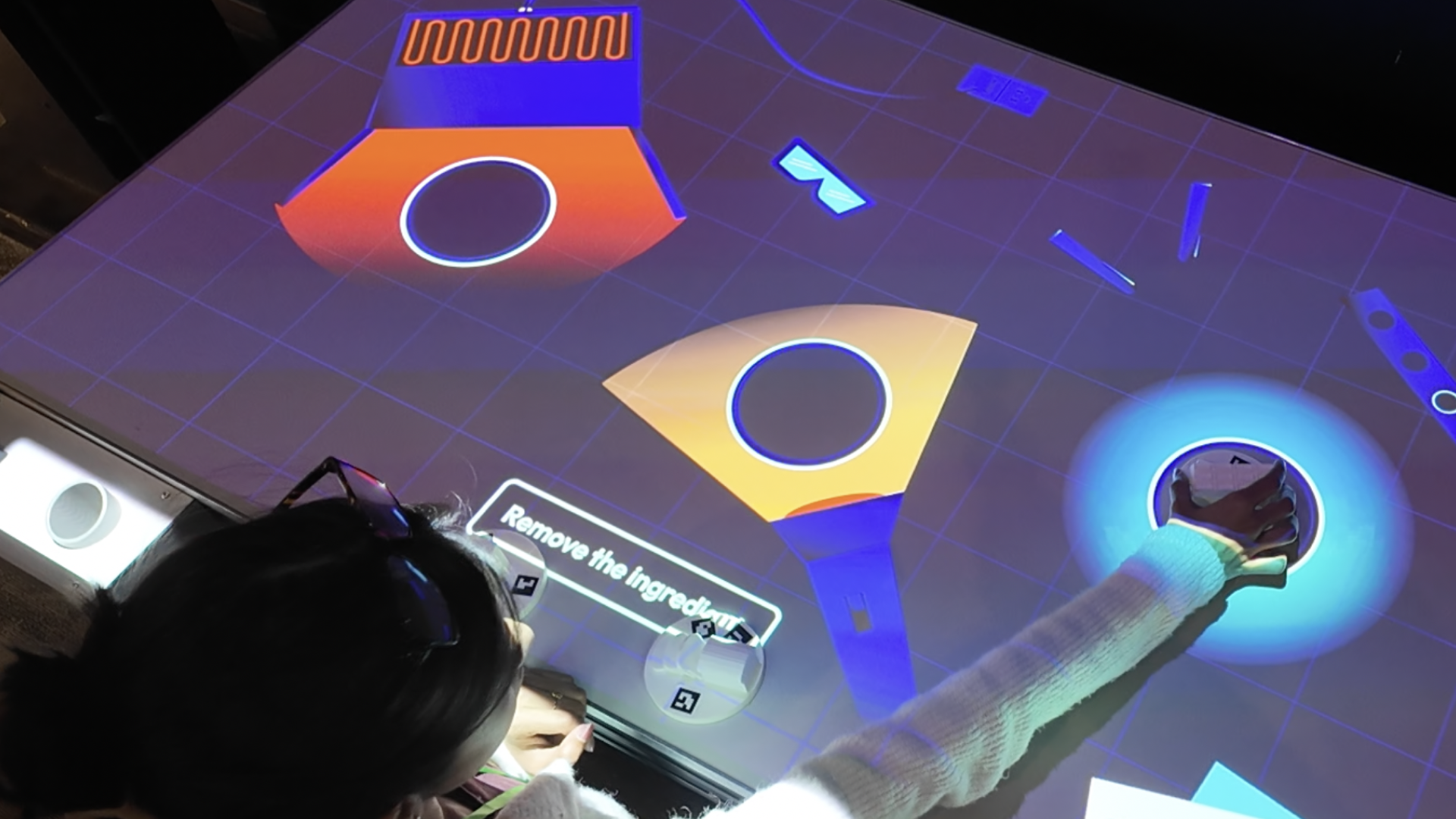
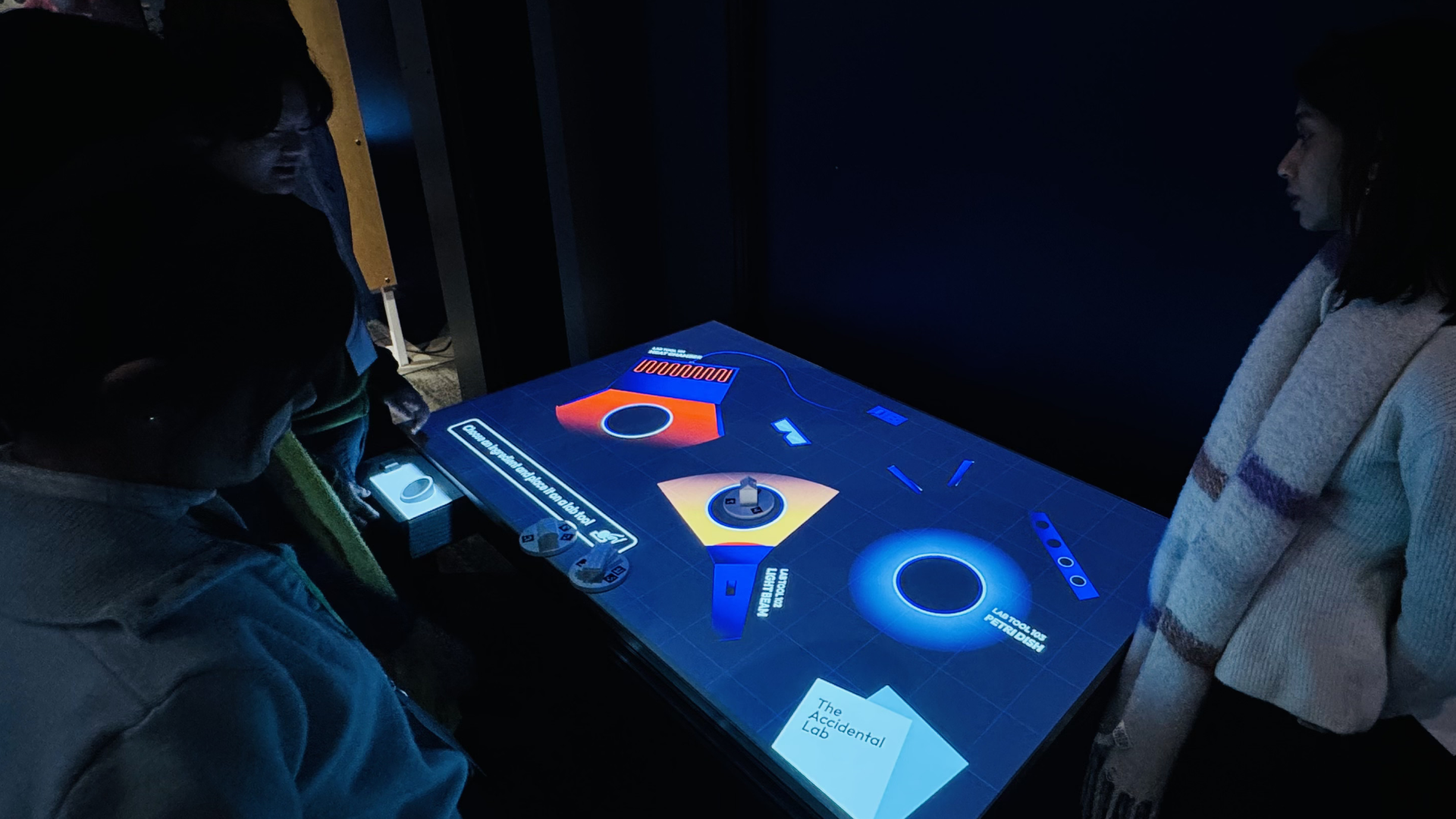
The interface was designed with identifiable illustrations and just enough information for the user to understand how to proceed with interaction.


Developing the Exhibit
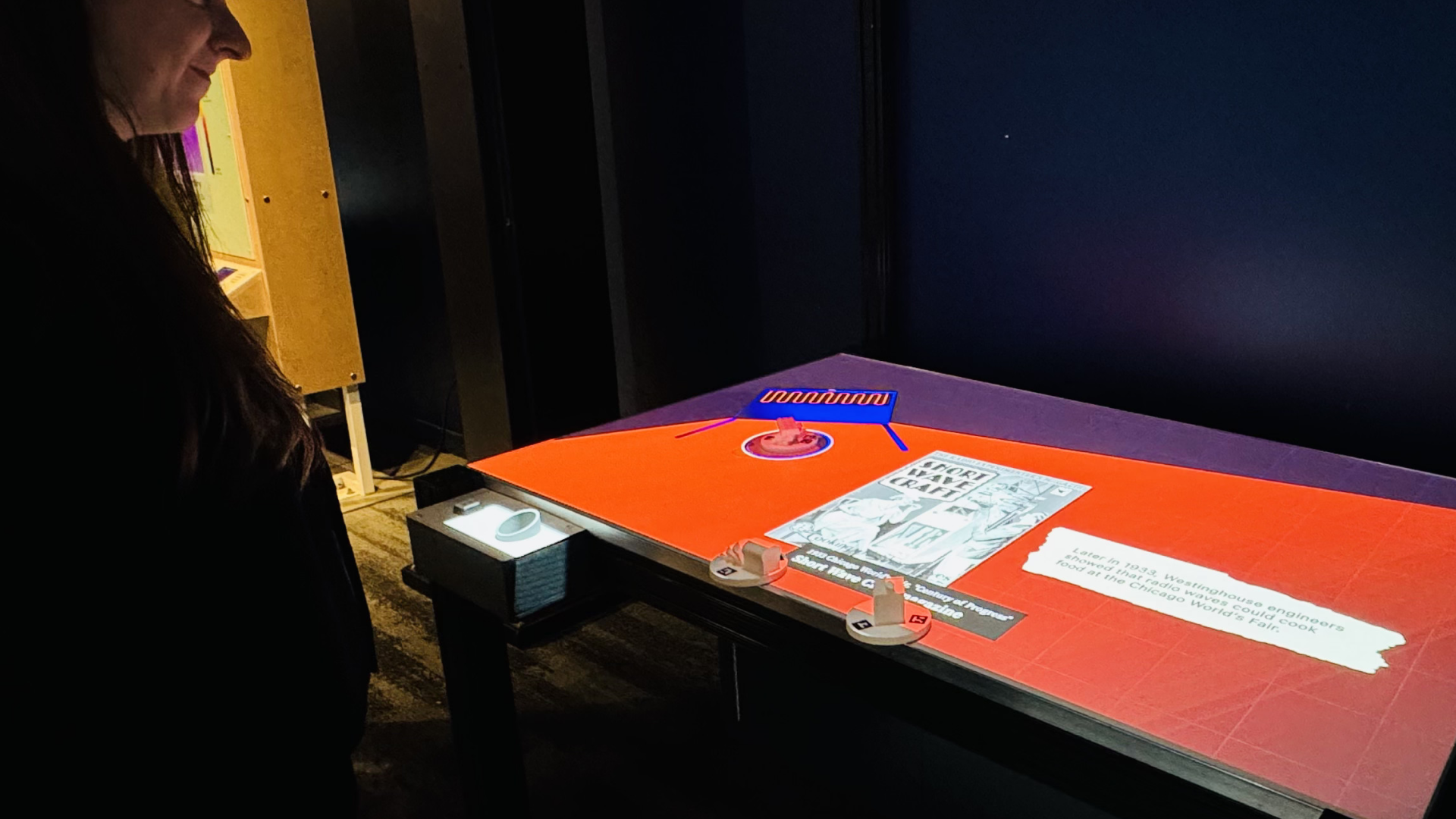
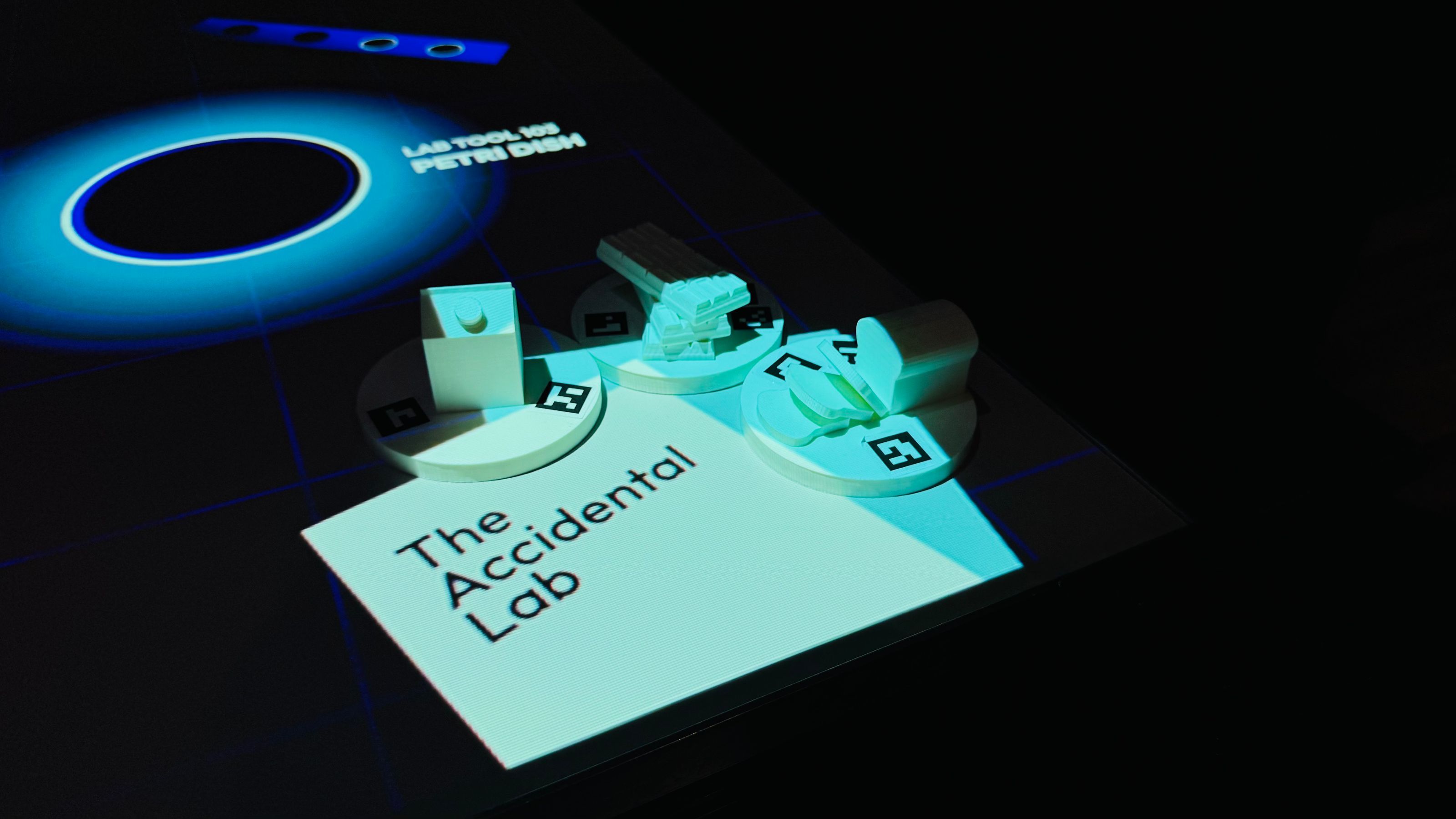
With a mix of Unity and Computer Vision, the exhibit was developed using 3D printed physical objects with special markers identifiable by an IR Camera connected to Computer Vision.
.png)
User Testing
Tangible interaction landed immediately
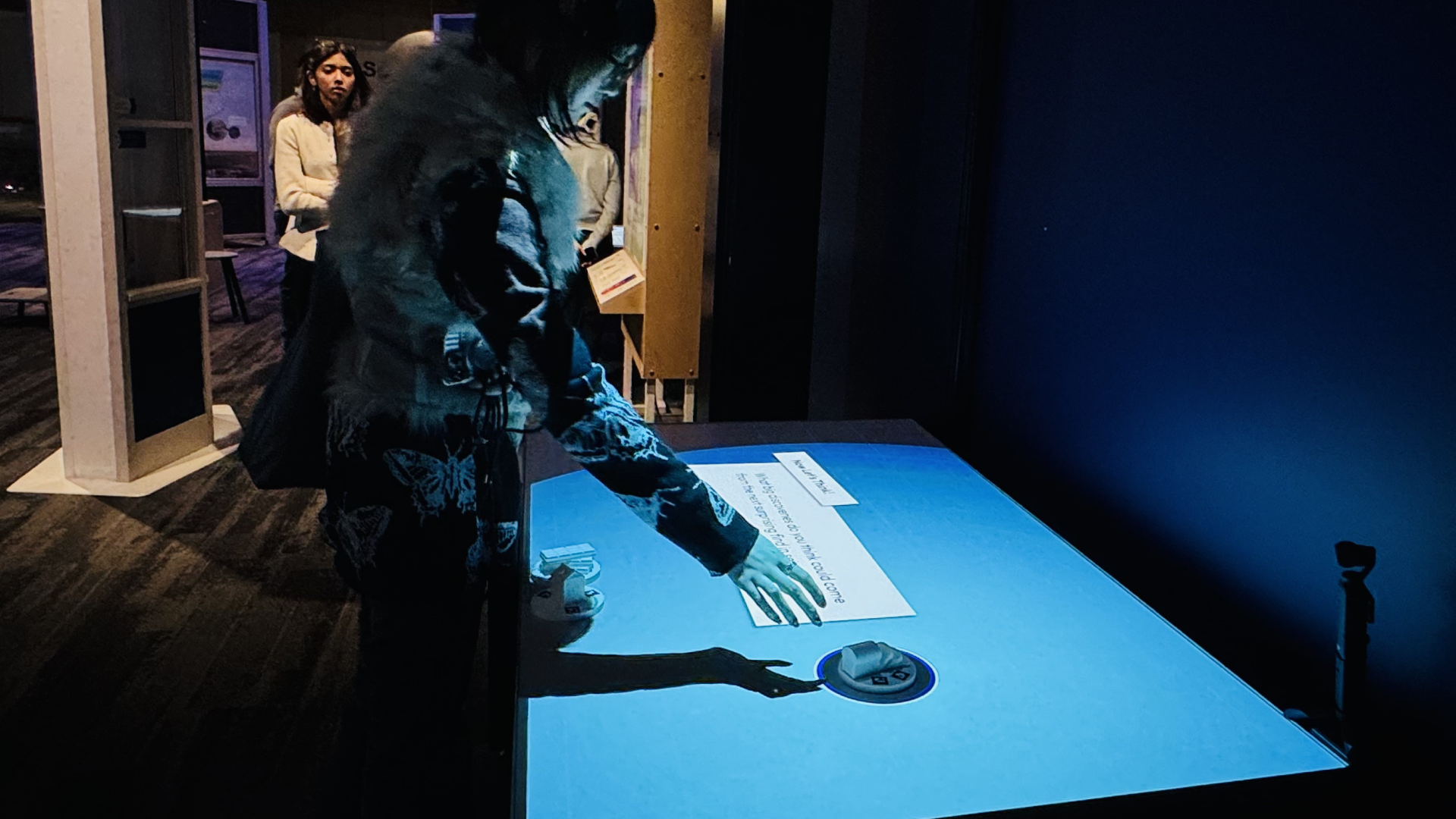
93% of users loved manipulating physical objects. The act of mixing ingredients felt natural and intuitive without instruction. Most visitors tried 2–3 combinations independently, and many expressed wanting to try more.
The content sparked genuine curiosity
86% reported learning something specific. 71% expressed surprise at the discoveries shown through the animations. Older visitors spontaneously started conversations with each other about what they were seeing.
The experience felt smooth
Users found interactions responsive and unfrustrating. The animations were described as engaging and immersive. No one reported hitting a wall or feeling stuck.